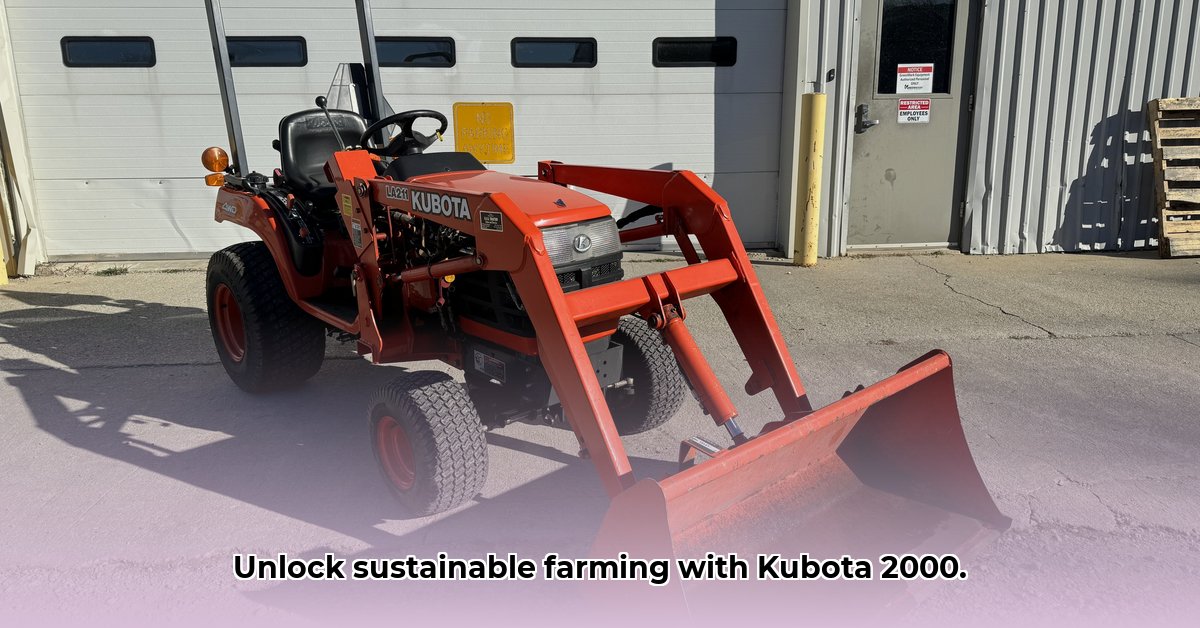
This guide provides a comprehensive overview of the Kubota L2000 tractor, focusing on its suitability for sustainable agriculture. We'll cover everything from purchasing and maintenance to operational considerations and its environmental impact. While the L2000 might lack the bells and whistles of modern tractors, its affordability, fuel efficiency, and maneuverability make it a compelling option for smaller farms committed to sustainable practices. For more information on Kubota L-series tractors, check out this helpful resource.
Buying a Used Kubota L2000: A Step-by-Step Guide
Purchasing a used Kubota L2000 requires careful planning and a thorough inspection. Don't rush into a purchase; a well-maintained L2000 can provide years of service, but a neglected one can become a money pit.
1. Pre-Purchase Inspection:
- Engine: Listen for unusual noises, check for leaks, and ensure it starts easily. A mechanic's expertise ensures a thorough evaluation. (Consider hiring a mechanic specializing in older Kubota models.)
- Transmission: Shift through all gears; smooth operation is essential. Any grinding or hesitation signals potential problems.
- Hydraulic System: Look for leaks and test the responsiveness of the hydraulic controls.
- Implement Check: Carefully inspect any included implements (plows, loaders, etc.) for wear and tear and functionality.
- Overall Condition: Assess for rust, dents, cosmetic damage, and signs of previous repairs. A detailed visual inspection is crucial.
2. Finding a Reliable Seller:
Thoroughly research the seller's reputation; online reviews and word-of-mouth are valuable resources. A reputable seller will be transparent and willing to answer questions honestly. Ask for maintenance records.
3. Price Negotiation:
Negotiate a fair price based on the tractor's condition and the market value. Don't hesitate to walk away if the deal feels unreasonable. A professional pre-purchase inspection can be a worthwhile investment.
Maintenance and Repair: Keeping Your L2000 in Top Shape
Regular maintenance is key to maximizing your L2000's lifespan and minimizing unexpected repairs.
Recommended Maintenance Schedule:
| Maintenance Task | Frequency | Estimated Cost (USD) | Notes |
|---|---|---|---|
| Oil Change | Every 50 hours | $50 - $150 | Use the correct oil weight and type. |
| Filter Replacement | Every 50-100 hours | $20 - $75 | Air, fuel, and hydraulic filters are vital. |
| Fluid Level Checks | Weekly/Before each use | Free | Monitor coolant, oil, and hydraulic fluid levels. |
| Tire Pressure Check | Weekly/Before each use | Free | Proper inflation enhances fuel efficiency and tire life. |
| Belt Inspection | Monthly | Free | Check for wear, cracks, and proper tension. |
Sourcing Parts: Finding parts for an older model like the L2000 might require more effort. Options include:
- Kubota Dealers: May still stock some parts or can order them, although expect higher prices.
- Online Retailers: Websites specializing in vintage tractor parts offer a wider selection.
- Independent Suppliers: These can sometimes be a good source for less expensive parts. Caution is advised; verify part quality before purchasing.
Troubleshooting: Simple problems like clogged filters are easily fixable. However, more complex repairs usually require a qualified mechanic. Budget for repairs; unexpected issues are a possibility with older machinery.
Operational Considerations: Optimizing Your L2000's Performance
The Kubota L2000, with its 20 horsepower engine, is a versatile but compact tractor. Understanding its capabilities is crucial for efficient operation and preventing damage.
Suitable Tasks: The L2000 excels in smaller-scale tasks like:
- Tillage of smaller fields.
- Light hauling of materials.
- Orchard work (due to its maneuverability).
- Mowing and landscaping tasks.
Unsuitable Tasks: Avoid overloading the L2000 with tasks beyond its capacity, such as:
- Heavy plowing.
- Large-scale hay baling.
- Pulling extremely heavy loads.
Environmental Impact & Sustainability: The L2000's Eco-Friendly Aspects
While not a modern, emission-controlled machine, the L2000 presents a compelling case for sustainable farming. Its smaller engine translates to:
- Lower Fuel Consumption: This directly reduces greenhouse gas emissions compared to larger tractors.
- Reduced Operational Costs: Less fuel translates to significant cost savings over time.
However, proper maintenance is vital to minimize potential environmental impacts, including preventing fluid leaks and ensuring responsible disposal of waste.
Long-Term Planning: Extending Your L2000's Lifespan
Planning for the future of your L2000 involves a proactive approach that extends its service life. This includes:
- Regular Maintenance: Adherence to a rigorous maintenance schedule is paramount.
- Relationship with a Mechanic: Building a relationship with a local mechanic familiar with Kubota L2000s ensures timely and efficient repairs.
- Cost-Benefit Analysis: If major repairs are needed, weigh the costs against buying a new or newer model. Factors such as fuel efficiency, predicted repair costs, and overall operational expenses should be considered.
Conclusion: Making an Informed Decision
The Kubota L2000 offers a viable path to sustainable farming, particularly for smaller-scale operations. Its economic advantages and relatively low environmental impact must be weighed against its limitations and potential maintenance needs. With thorough planning, responsible maintenance, and a clear understanding of the tractor's capabilities, however, the L2000 can become a reliable and cost-effective workhorse on any environmentally conscious farm. Remember that this guide provides insights, but consultation with experienced mechanics and agricultural professionals is highly recommended.